Tucked between India and the Tibetan plateau, Bhutan is one of the last Vajrayana Buddhist kingdoms on earth. Its people call it Druk Yul, the Land of the Thunder Dragon, after the thunder that rolls through its valleys and the Drukpa school of Buddhism that shaped it.
A kingdom that chose its own path
Stone tools found in the valleys suggest people lived here as early as 2000 BC. Early Tibetan records called the region Lho Mon, the "southern land of darkness", and Lho Jong Men Jong, the "southern valleys of medicinal herbs". Buddhism arrived in the 7th century, when the Tibetan king Songtsen Gampo built Kyichu Lhakhang in Paro and Jambay Lhakhang in Bumthang. A century later, Guru Padmasambhava (Guru Rinpoche), revered as the Second Buddha, flew to Paro Taktsang on the back of a tigress and spread the teachings across the valleys.
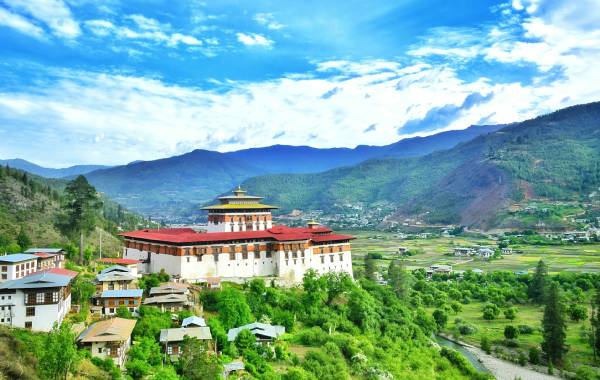
In 1616 the Tibetan lama Zhabdrung Ngawang Namgyal arrived and unified the country. He built the great dzongs (fortress-monasteries) that still govern each district, created a dual system of religious and civil administration and gave Bhutan a distinct national identity. After his death, regional rulers competed for power until Ugyen Wangchuck, the Governor of Trongsa, was chosen as the first hereditary king in 1907.
The Wangchuck dynasty has ruled ever since. Bhutan stayed deliberately isolated until the 1960s, built its first paved roads with Indian support, joined the United Nations in 1971 and opened to tourism in 1974. In 2008, at the King's own initiative, it became a democratic constitutional monarchy. That same year the Fifth King, His Majesty Jigme Khesar Namgyel Wangchuck, was crowned.
The people of Bhutan
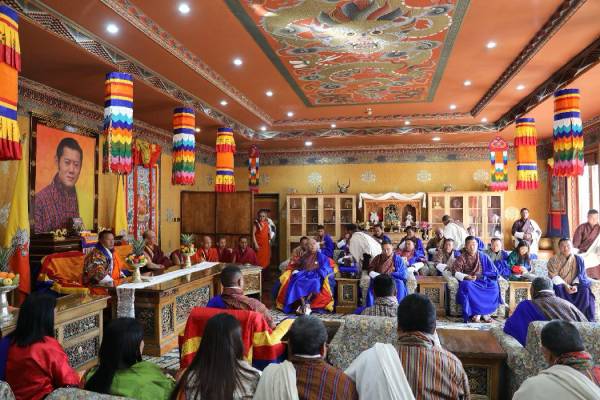
Bhutan has three main groups. The Ngalops live in the west and gave the country its national language, Dzongkha. The Sharchops live in the east and speak Tshangla. The Lhotshampas are of Nepali origin and live mainly in the southern foothills. Smaller communities such as the Brokpas of Merak-Sakteng and the Layaps of the far north keep their own dress, dialects and yak-herding traditions.
More than 19 dialects are spoken across the country. English is the language of school instruction, so most people you meet, especially guides, hoteliers and younger Bhutanese, speak it comfortably. Hindi is widely understood thanks to Bollywood and close ties with India.
Faith in everyday life
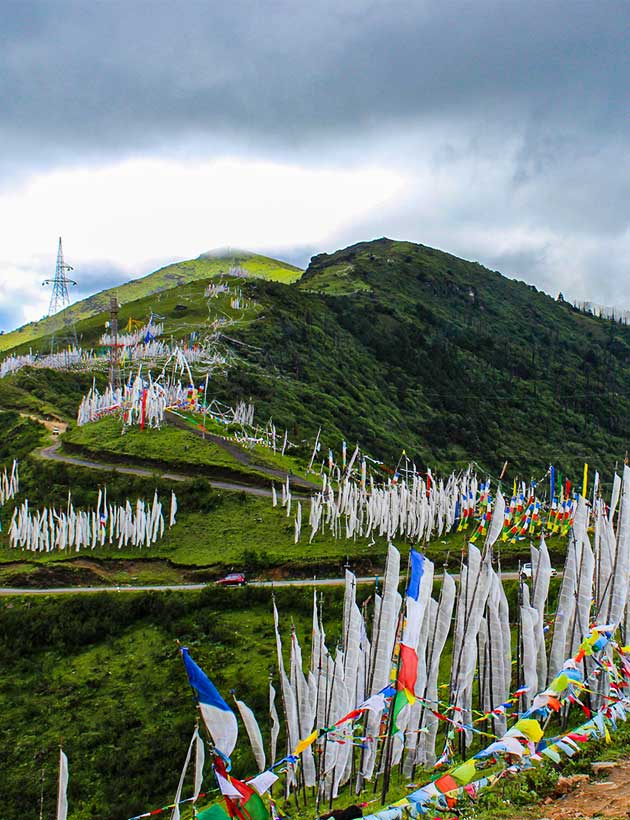
Buddhism is everywhere in Bhutan: in the prayer flags strung across mountain passes, the prayer wheels turned by elders on their morning walks, the chortens (stupas) at river crossings and the red-robed monks in every dzong. The state religion is the Drukpa Kagyu school of Vajrayana Buddhism. Hindu communities in the south celebrate Dashain and Diwali, which are also public holidays.
Why travellers fall in love with Bhutan
Pristine nature
Around 71% of the country is forested, and the constitution requires that at least 60% stays that way.
Living heritage
Centuries-old dzongs are still working seats of government and monastic life, not museums.
Uncrowded travel
The "High Value, Low Volume" policy keeps trails, temples and towns calm and authentic.
Gross National Happiness
A national philosophy that puts wellbeing, culture and the environment at the centre of development.
National symbols
- National animal: the Takin, a rare goat-antelope found in high forests and meadows.
- National bird: the Raven, which also crowns the royal headdress.
- National flower: the Blue Poppy (Meconopsis gakyidiana), which blooms above the treeline in early summer.
- National tree: the Cypress, often planted beside temples and dzongs.
- National sport: Archery, played in every village with colourful songs, dances and friendly banter.
Planning your first visit? Read about getting into Bhutan, the visa and entry permit process and the Sustainable Development Fee, or simply ask us. We plan Bhutan trips every week.
Frequently Asked Questions
Where is Bhutan located?
Bhutan is a landlocked country in the Eastern Himalayas. China (Tibet) lies to the north and the Indian states of Sikkim, West Bengal, Assam and Arunachal Pradesh to the west, south and east. The nearest Indian gateway cities are Siliguri/Bagdogra in West Bengal and Guwahati in Assam.
Why is Bhutan called the Land of the Thunder Dragon?
The name Druk Yul comes from the Drukpa school of Buddhism. Legend says its founder heard thunder, which Bhutanese believe is the voice of dragons, when consecrating a monastery. The dragon appears on the national flag.
Is Bhutan expensive to visit?
Visitors pay a daily Sustainable Development Fee on top of hotels, transport and a guide. Indian nationals pay a much lower rate than international visitors. A well-planned itinerary with the right hotel category keeps costs reasonable. See current SDF rates.
Last updated: 15 October 2026